I. Existing Technology:
Currently, most domestic seat SBR sensor production still using outdated silver paste processes to produce SBR sensors; the European Union has prohibited the use of silver paste for SBR production, and IEE no longer uses silver paste to produce SBR sensors in the EU.
⇒
Traditional Silver Paste Printing:
SBR is a standard mandatory product regulated by law, with a domestic annual output value (GB/T24551) reaching 1 billion RMB, and 150 million euros in the EU (ECE R16);
SBR belongs to the membrane switch product category, using traditional silver paste printing technology;
The production process of silver paste consumes large amounts of silver metal;
The printing and drying process of silver paste consumes substantial electrical energy and generates significant废气 (waste gas) that pollutes the air;
Silver is a heavy metal....
I. Existing Technology:
Currently, most domestic seat SBR sensor production still using outdated silver paste processes to produce SBR sensors; the European Union has prohibited the use of silver paste for SBR production, and IEE no longer uses silver paste to produce SBR sensors in the EU.
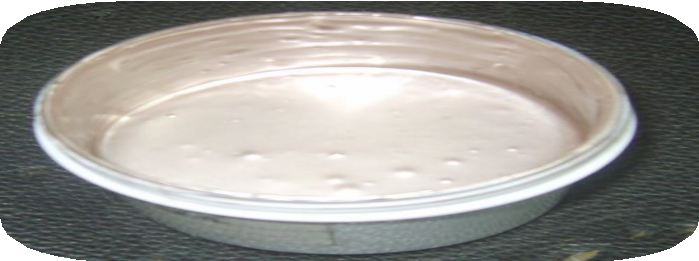 ⇒
⇒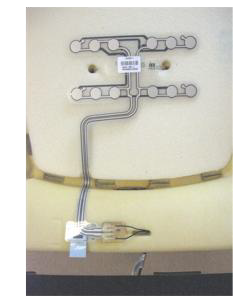
Traditional Silver Paste Printing:
- SBR is a standard mandatory product regulated by law, with a domestic annual output value (GB/T24551) reaching 1 billion RMB, and 150 million euros in the EU (ECE R16);
- SBR belongs to the membrane switch product category, using traditional silver paste printing technology;
- The production process of silver paste consumes large amounts of silver metal;
- The printing and drying process of silver paste consumes substantial electrical energy and generates significant废气 (waste gas) that pollutes the air;
- Silver is a heavy metal. Silver pollution is classified as a Category I international pollutant, causing environmental pollution during production, manufacturing, and recycling processes;
- Silver printing does not meet international environmental requirements and is considered an outdated technology.
Flexible SBR Fabric Sensor
New Quality Technology - Advantages
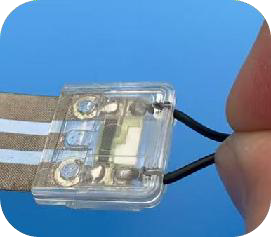
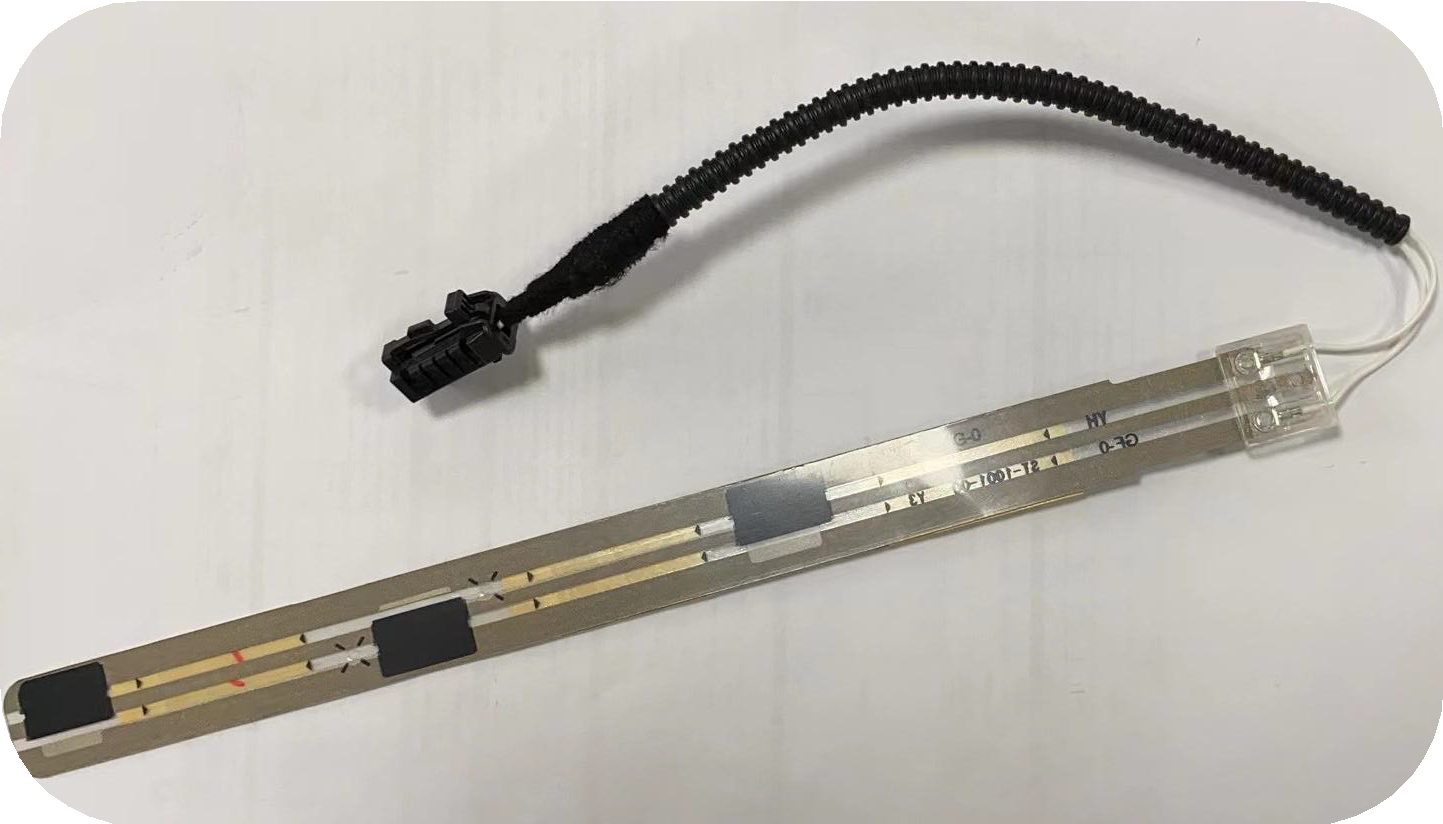
The innovative flexible fabric SBR adopts advanced processes such as roll-to-roll conductive fabric and back-of-trim cover placement technology, offering extremely high cost-effectiveness.
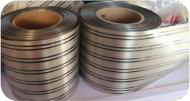


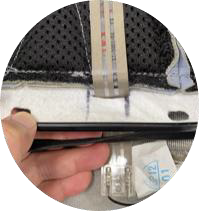
- FES flexible conductive material has electrical conductivity equivalent to silver paste;
- FES flexible conductive material uses cold processing technology to create conductive circuits, replacing the existing silver paste thermal processing. This saves significant energy consumption associated with silver paste printing, greatly reduces heavy metal silver pollution, and meets domestic and international environmental requirements;
- The cold processing technology replaces thermal processing, offering high cost-effectiveness and increasing production capacity by over a hundred times;
- This new quality process applied to the membrane switch field replaces traditional silver paste printing, such as in printed circuit boards for computer keyboards and various buttons/switches on instruments, equipment, and household appliances, significantly reducing environmental pollution annually.
New Quality Technology - IP/Mass Production:
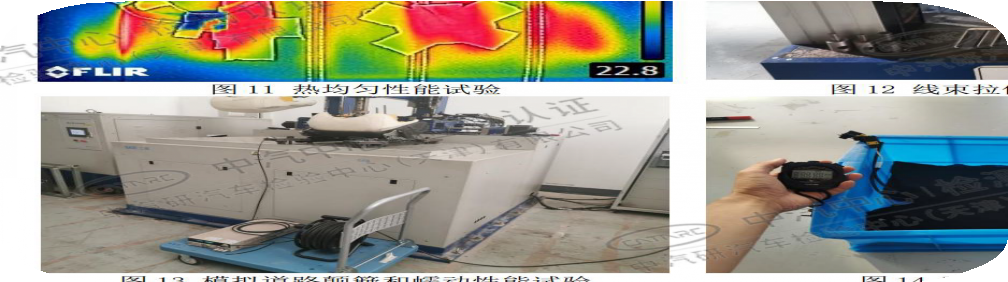
The innovative flexible fabric SBR sensor has been granted a national invention patent and has passed certification by the Tianjin National Automotive Inspection Center.
Compared to silver paste printing technology, the innovative flexible fabric SBR sensor can save domestic resources annually:
The silver paste process for SBR sensors consumes approximately 300 million RMB worth of silver metal + 110 million kWh of electrical energy annually; silver is a heavy metal causing irreversible pollution to soil and rivers, and volatile gases cause secondary air pollutio